


Thierry Courvoisier, August 2026
Photos are by Barbara and Thierry Courvoisier except when mentioned otherwise
The Gambiers, the southeastern most archipelago of French Polynesia, is the first stop in French Polynesia when sailing from South America. It had a reputation of being a welcoming spot after many days at sea. A reputation that may be changing now. What is certain is that the fellow cruisers moored in the bay of Rikitea are most friendly and welcoming. But despite this the Gambiers is not an ideal place to have a significant health problem. There is a small dispensary in Rikitea, the only village, where a medical doctor and a nurse officiate. We were to learn that both live together on the Amel supermaramu anchored next to Gaia. While they could deal with my urinary emergency (see Flying Fish 2025) and saved my life, they were not in a position to solve the issue. For this I had to fly to Papeete some 800NM away and see from there. There are only two flights per week from the Gambiers to Papeete, implying that I had to stay in a rather uncomfortable situation several days on board before seeing further. That time, like the following period while I was in Papeete and Barbara still on board, was made considerably lighter by the presence of friendly crews also anchored in the bay. These included the crew of OCC boat Songster and that of BoatyMcBoatface.
Barbara stayed on board while I was in Papeete going through a number of medical analyses in various locations -with fuzzy addresses difficult to figure out as is usual there- to learn that a rather heavy surgery was necessary. Our crew, Uwe, on board with Barbara developed some fever and a total incapacity to help her, even to look at the chartplotter to ensure that the anchor was holding, a task that Barbara’s eyesight made most difficult. Getting out of this situation required that we found a way of sailing Gaia to Papeete, so that Barbara could join me while I was in hospital. This was solved when the skippers of two neighbouring boats in Rikitea, Mélanie and Daniela, offered to sail Gaia. Mélanie and Daniela are both very experienced, Mélanie being a professional skipper. They learned the ropes of Gaia with Barbara and got ready to sail to Papeete for some six days taking Mélanie’s daughter along. This extraordinary offer solved one major issue. The three of them left the day after my surgery when Barbara flew to Papeete and arrived in Papeete as planned 6 days later.
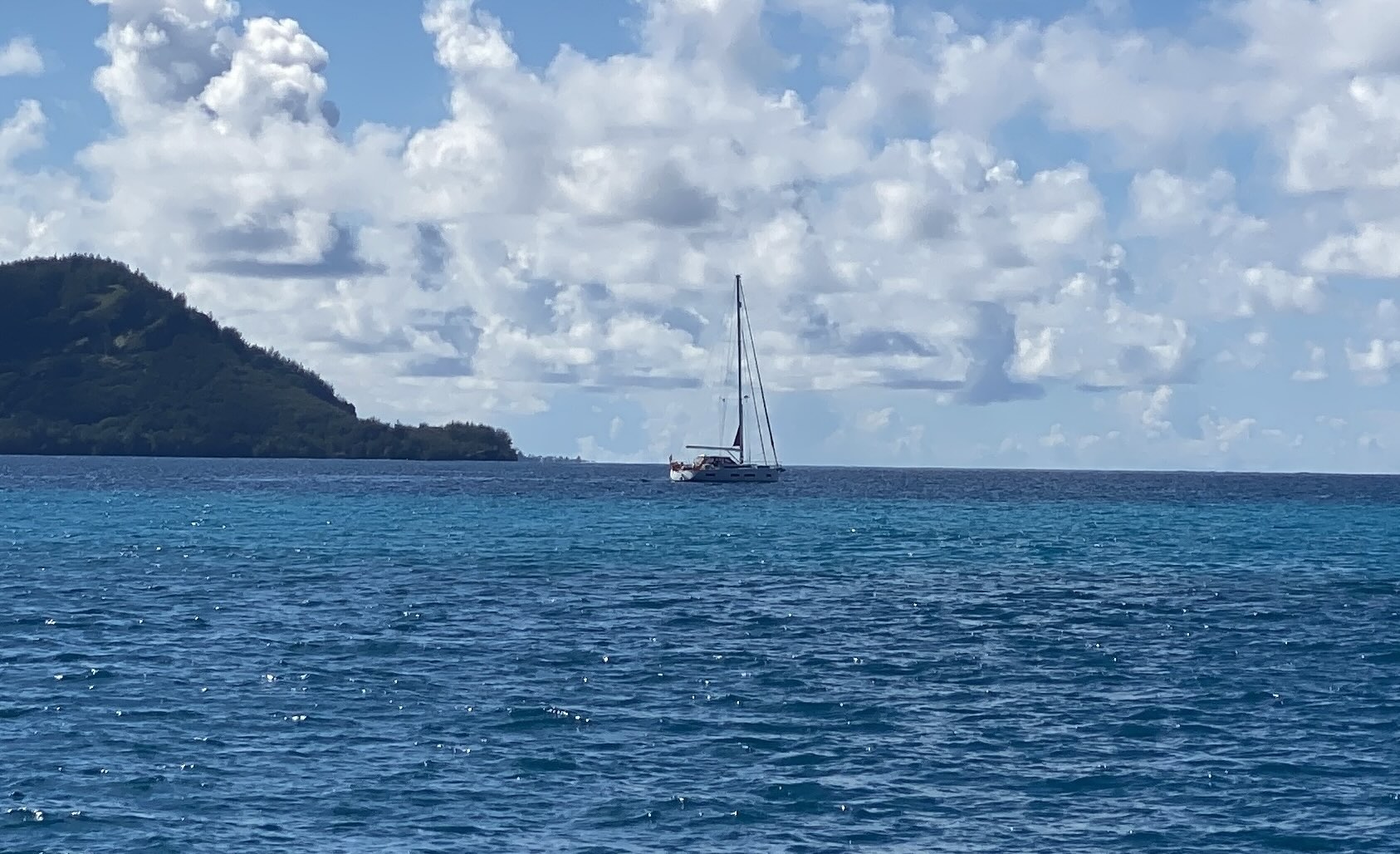
Gaia departs from the Gambiers for Papeete some 800 NM away
Administration was complex in this situation. While the insurance work to have a skipper, Mélanie, sail Gaia was straightforward, the Papeete administration around the hospital was more arduous. The afternoon before surgery I got a call informing me that surgery could only be initiated after the totality of the expenses were paid before the following morning. Our health insurance’s only message was: “pay all, we’ll see what we re-imburse afterwards”; only moderately helpful. It was already evening in Europe, no way to organize a bank transfer, only credit cards remained. It took all reserves on all my cards to have this done before walking into the surgery ward. Organising a berth in Papeete was also a problem as the marina does not take reservations. It is only after repeated calls mentioning our difficulties that the officials, then most helpful, granted us a place and made sure that Mélanie and her crew would be met upon arrival.
When Barbara arrived in Papeete, our daughter Sophie had flown from Switzerland for support. A French lady, Sabine, met in the hospital corridors became a most helpful friend during our stay in Tahiti. She met Barbara at her flight and provided some most welcome friendly environment in the following weeks. Gaia appeared few days later in Papeete and docked in marina. From then on we could look ahead again.
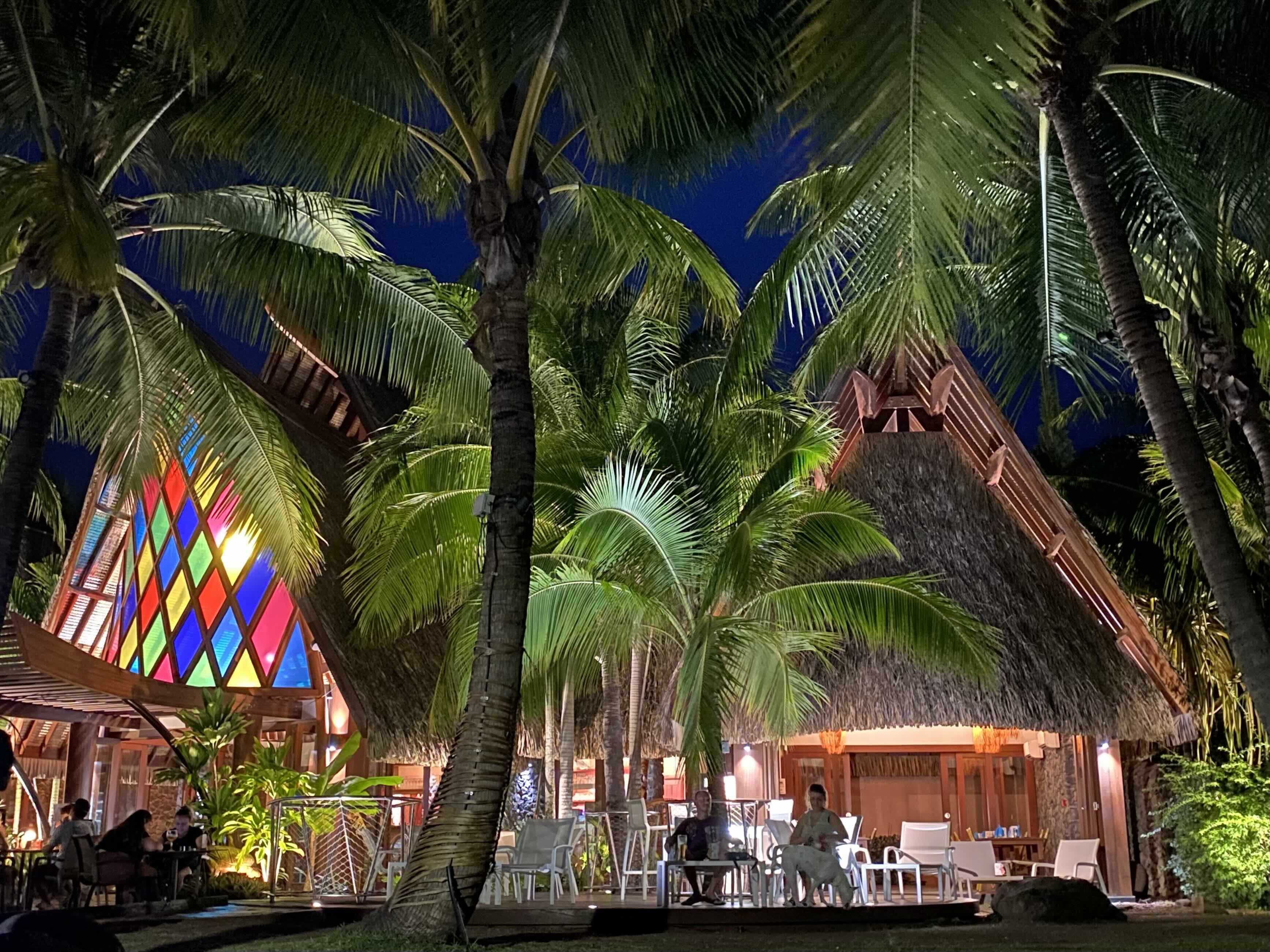
A bar in the Paofai park in Papeete. One of the few pleasant sections of the city

Street art is very present in South America and Polynesia
All of this began just a few days after our arrival in Polynesia from Chile, following 30 days at sea. Barbara was inhabited by images of throwing my body overboard had the problem arisen some two weeks earlier. While it was clear by then that I would fully recover, the medical professionals had been excellent, it was also clear that Barbara’s eyesight would not improve and that going through a similar story a second time was out of question. Crossing oceans to discover new regions of the world had come to an end for us.
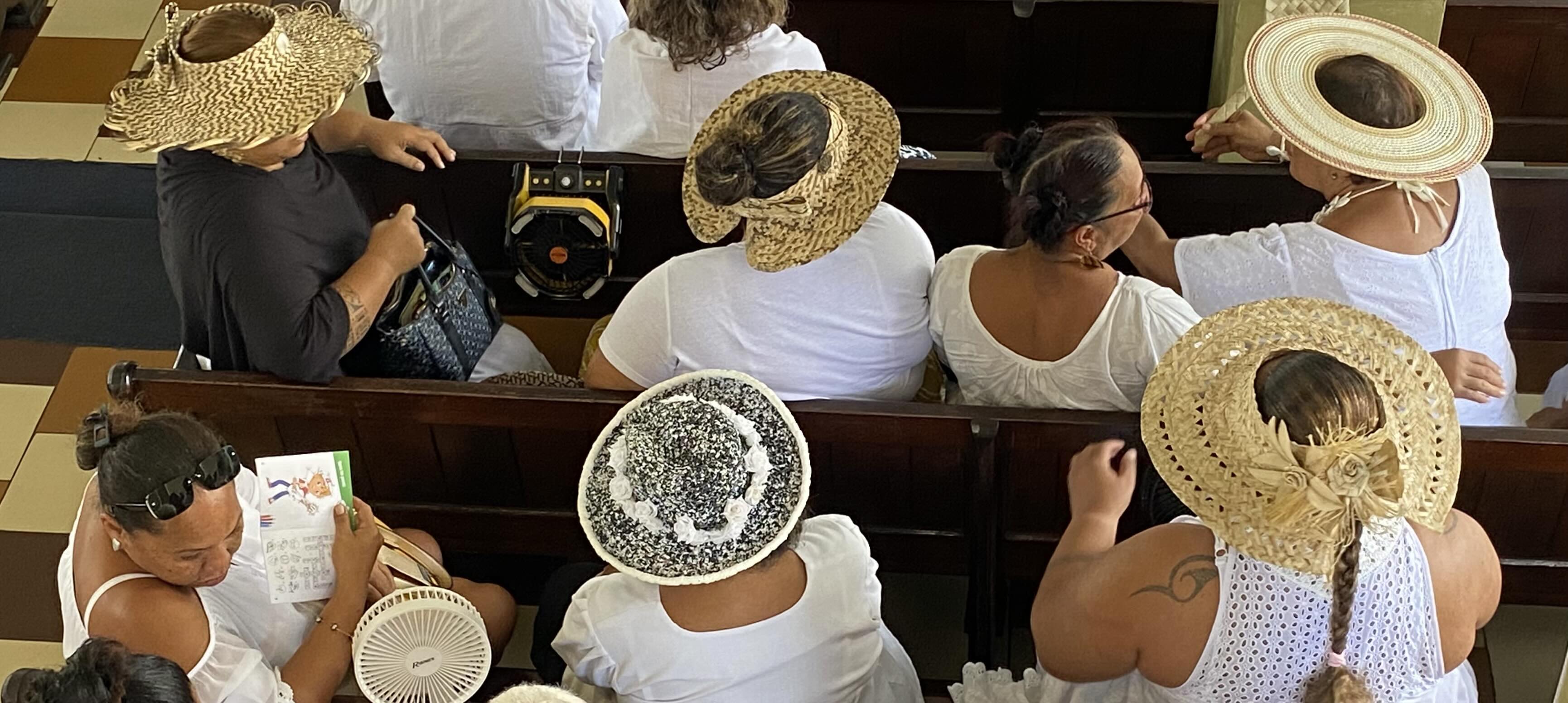
Religious ceremonies are omnipresent in Papeete. Here at the evangelic church.
Sailing has always been a means to discover the world for us. This meant that moving Gaia back to Europe and sail around, say, Brittany would not be an option. After some discussion we therefore decided to sell Gaia. A hard decision, as she had been our safe and comfortable traveling home from the Arctic to the Antarctic.
It is not so easy to sell a blue water cruiser in an area where a lot of the sailing is on catamarans around the islands. Long distance cruisers possess their own boats and holiday makers look for different types of vessels. The local brokers are either too small, and know it, to organize the sale of a travel yacht or make their business with the holiday market. We therefore started by looking for help further afield and resorted to the Amel contact for the South Pacific, a broker in New Zealand. The person was knowledgeable and serious. He came to Papeete to look at Gaia and talk with us before accepting the mandate.
It was then time to empty Gaia of all our personal belongings, three cubic meters of various material. Each box carried out of the boat took with it a fraction of the soul of Gaia. Everything was then packed in what is called a maritime box to be shipped to Switzerland. Various customs were involved, none seemed to understand what kind of international removal this corresponded to. Eventually all the goods appeared at our home in Switzerland and were delivered with a rather modest tax, but a not so modest removal expense.
The boat emptied, small repairs undertaken, physical strengths partly recovered, we visited some of the islands in order to not leave that part of the world without seeing at least some of the sights that make its reputation. We swam with sharks in Bora Bora, visited Gauguin’s and Jacques Brel’s tombs on Hiva Hoa, crossed by truck the island of Tahiti and visited Moorea. All as spectacular as expected and all a strong contrast to Papeete that we decidedly did not like.
End of May saw the boat ready, in trusted hands in Papeete, our belongings packed and sent. We were ready to fly home. It was some months earlier than expected and meant the end of our blue water cruising, but it came after many years of discovery from the Arctic to the Antarctic and from Russia to Polynesia. We had made a good use of our sailing years. This made the end of it much less sad.
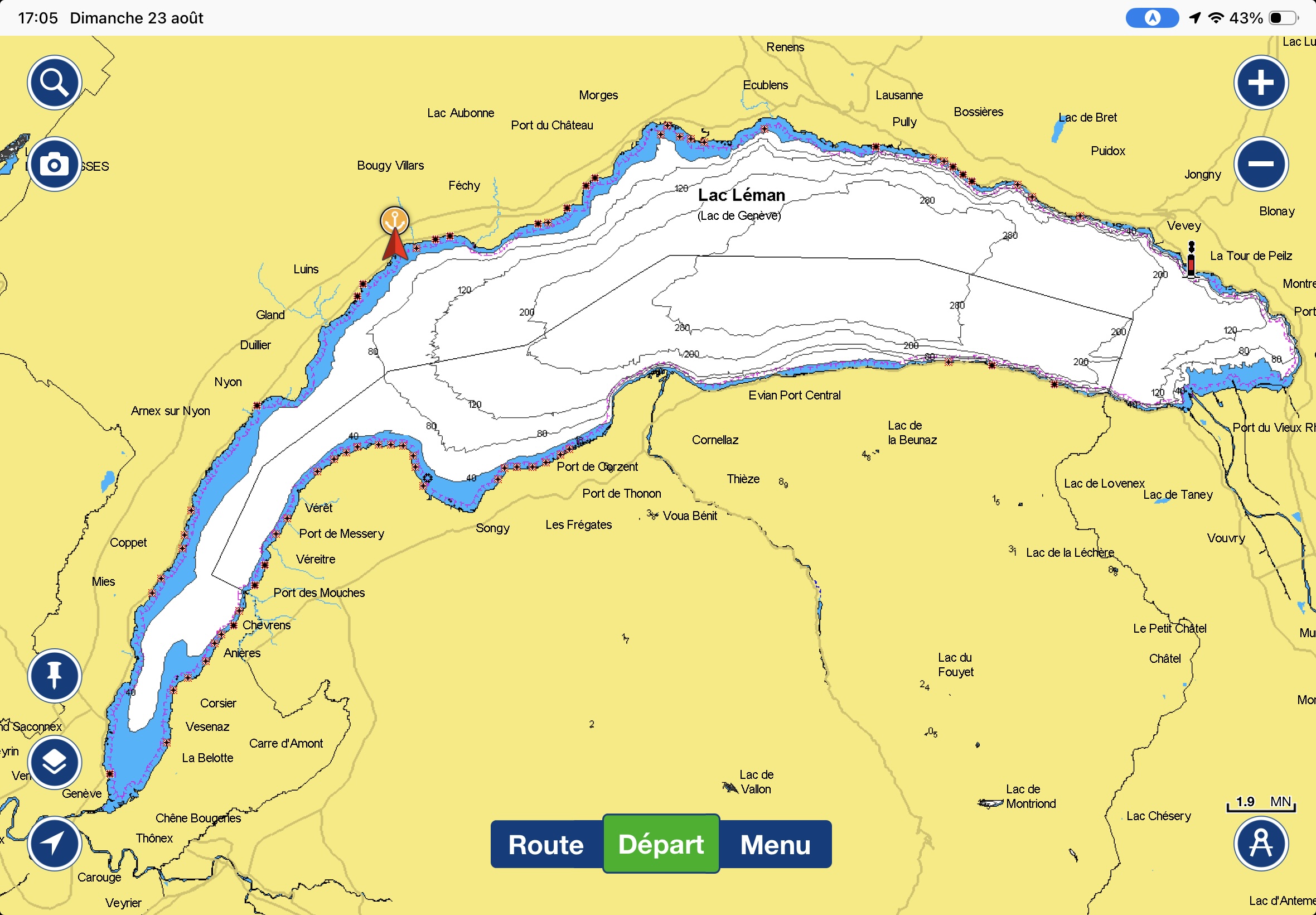
Lake Geneva on Navionics
In Switzerland we live in the small city of Rolle by the lake Geneva. This lake is seldom mentioned on these pages, if ever. It is the largest lake in Western Europe. It is banana shaped, some 40 NM following a middle lake route. The some 12NM extent from Geneva is called Le petit lac the small lake. It is moderately deep, some 70m, surrounded by moderate slopes, the mountains being some 15 kilometers away. The middle part, le grand lac, some 15 NM in length and 10NM wide, is deeper, 300m, and also reasonably far from the surrounding mountains. The last part, le haut lac, lies within steep slopes covered by a vineyard on the North shore and the Alps on the South shore.
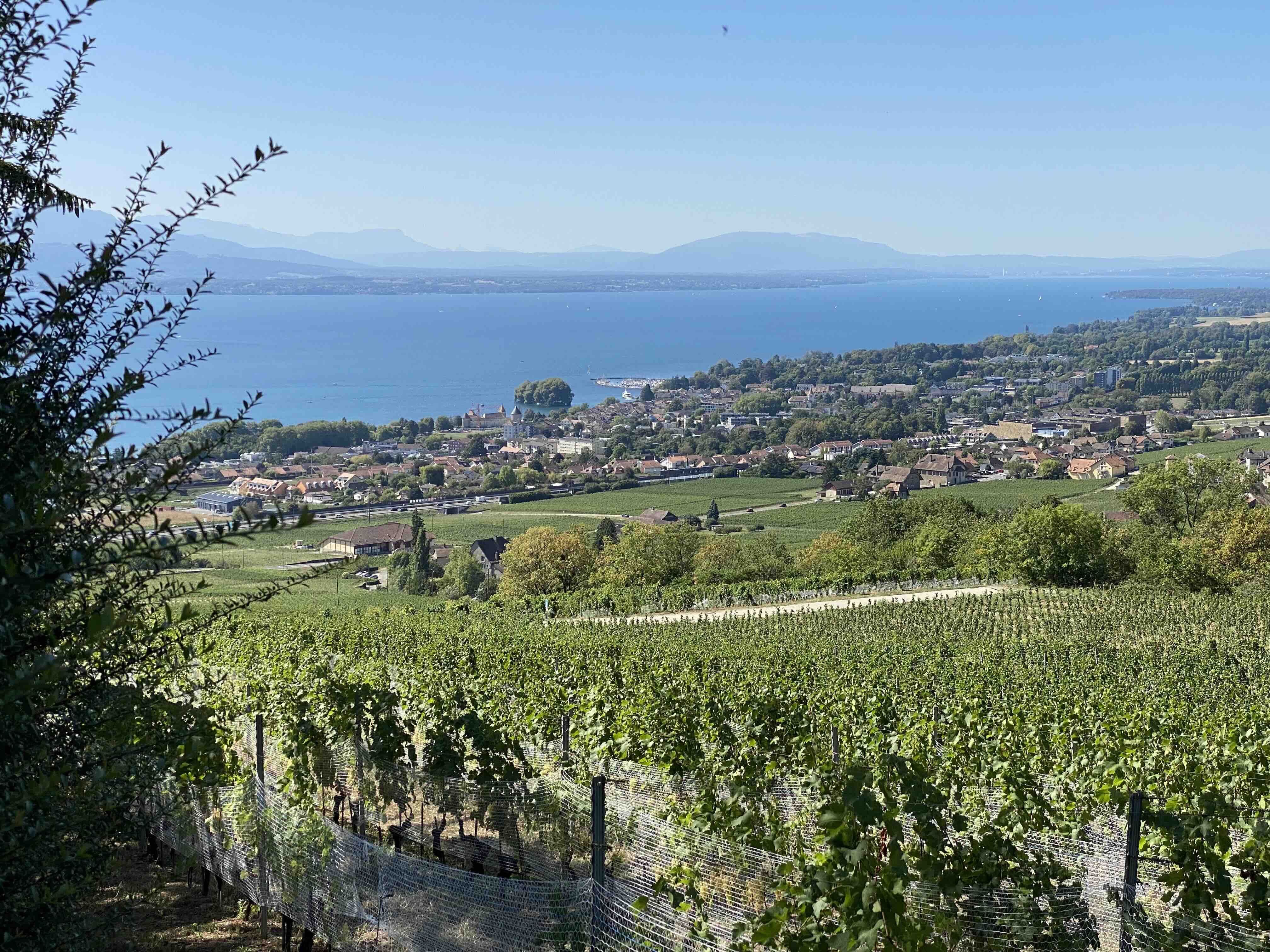
The “Petit lac”. Geneva is at the far end of the lake.
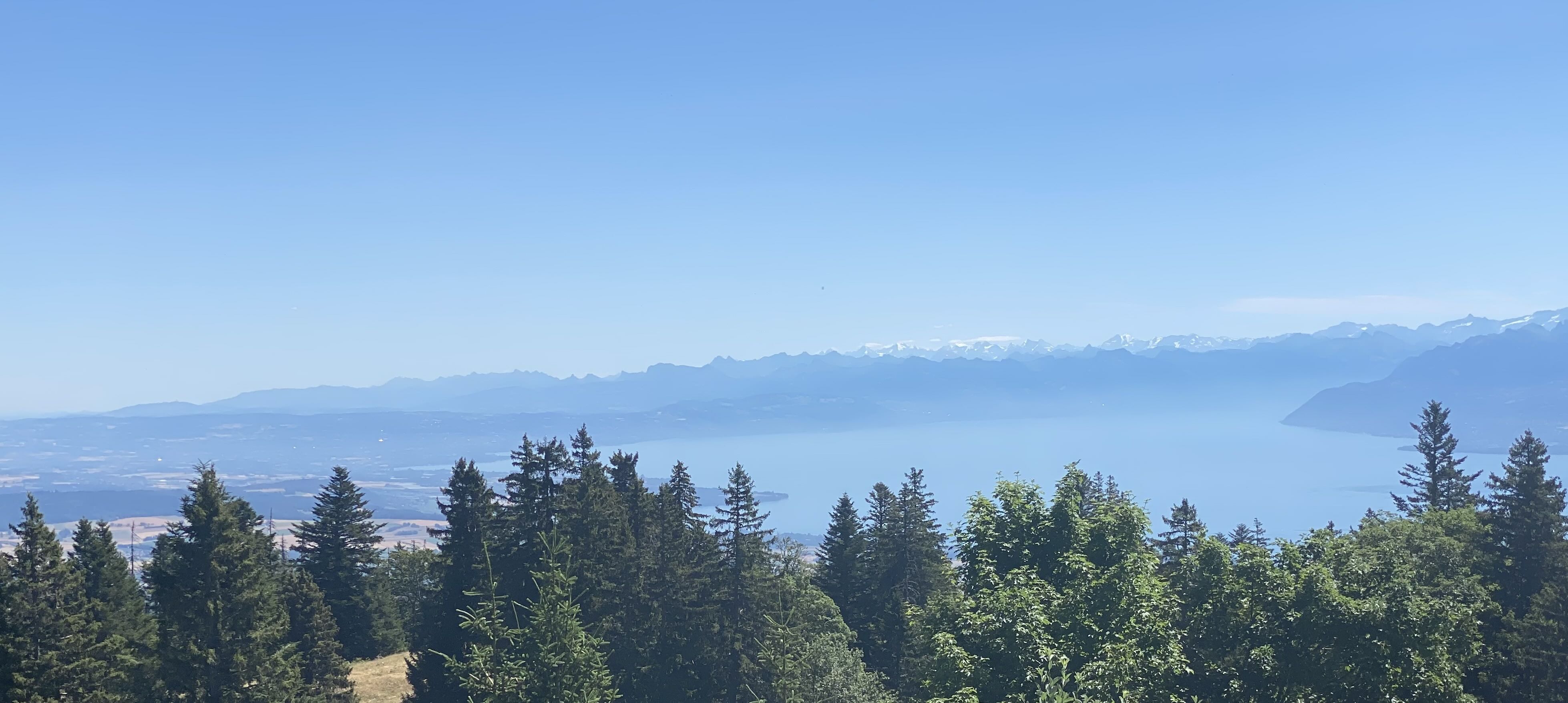
The “Grand lac”, the widest part of lake Geneva.
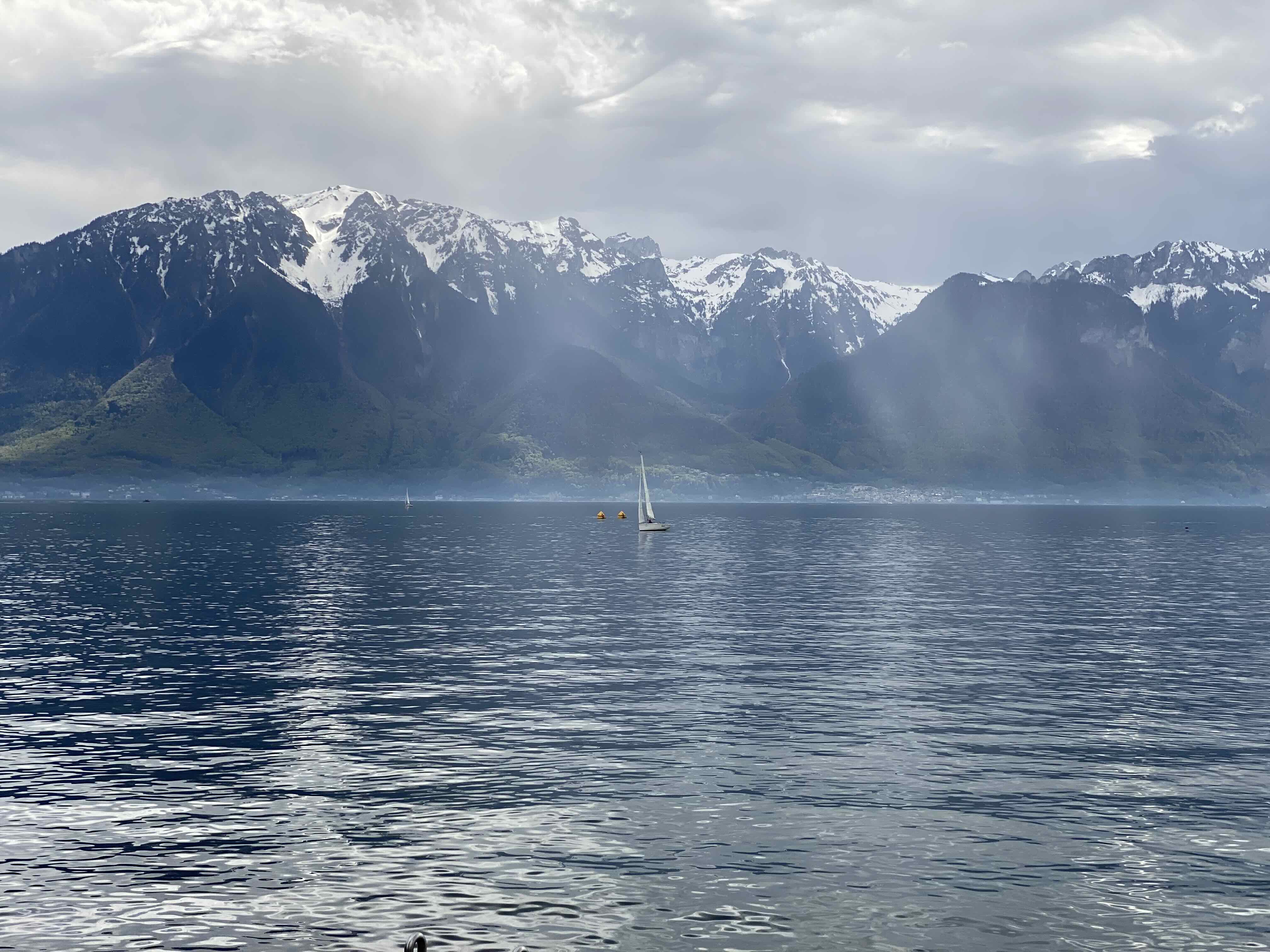
The “Haut Lac”, where mountains tower over the water.
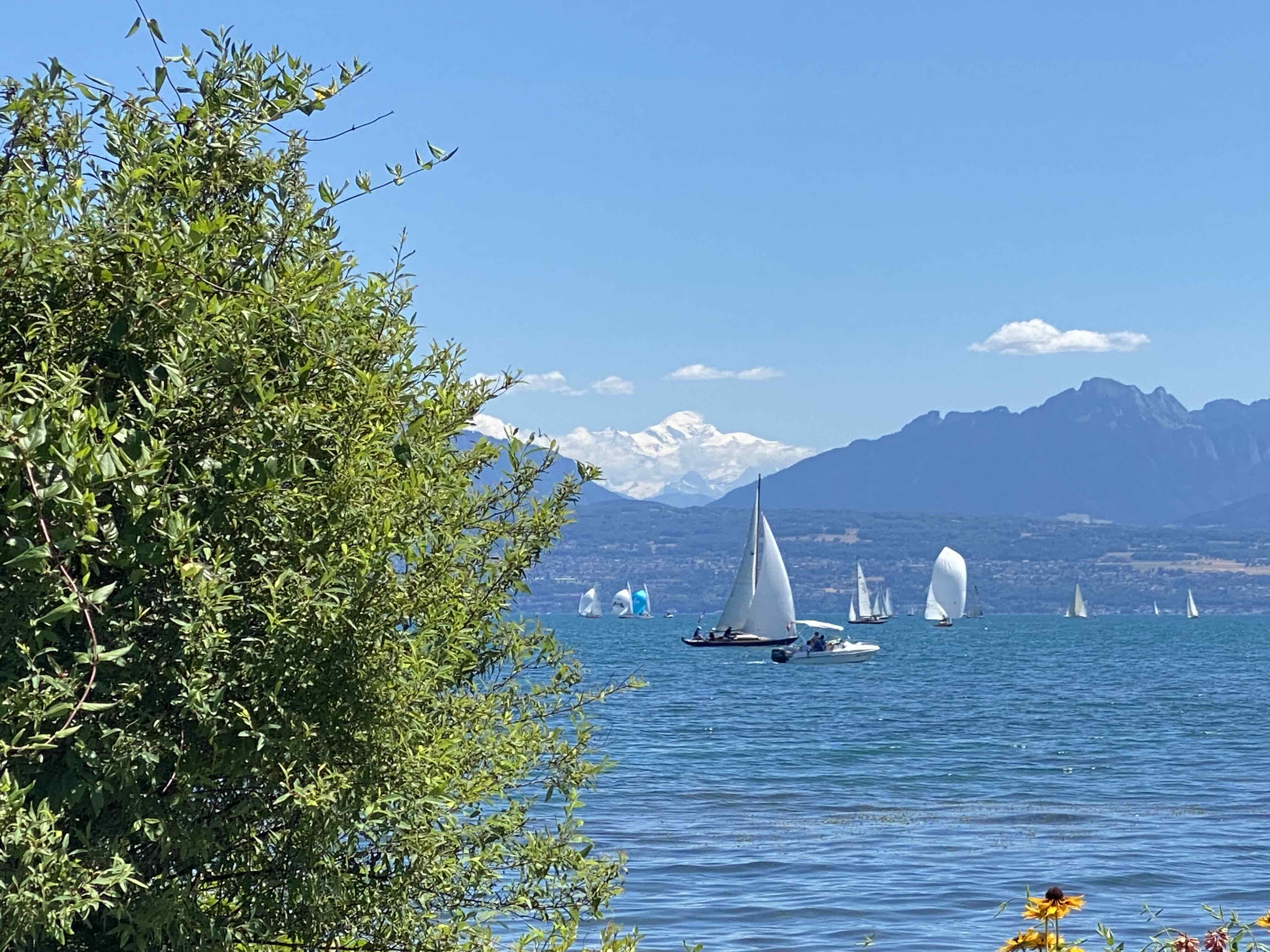
The Monc-Blanc, the highest mountain in Europe seen from the lake shore.
The study of lakes in general is called limnology. This science was fathered by François-Alphonse Forel (1841-1912) mostly around lake Geneva. Forel was borne in Morges another small city on the lake some 15km from Rolle. This science developed massively since Forel and gained in importance as we need to know more about our environment. Forel is indeed at the origin of the concept of an eco-system. Surprisingly, we also came across a trace of F.-A. Forel in Chile. There is a train winding along the river Maule in central Chile. A train we traveled on while visiting the country (see Flying Fish 2025). The name of a small station along the way caught our attention as it is called “Forel” after F.-A. Forel who spent some time in the region. But I never found out what he did there.
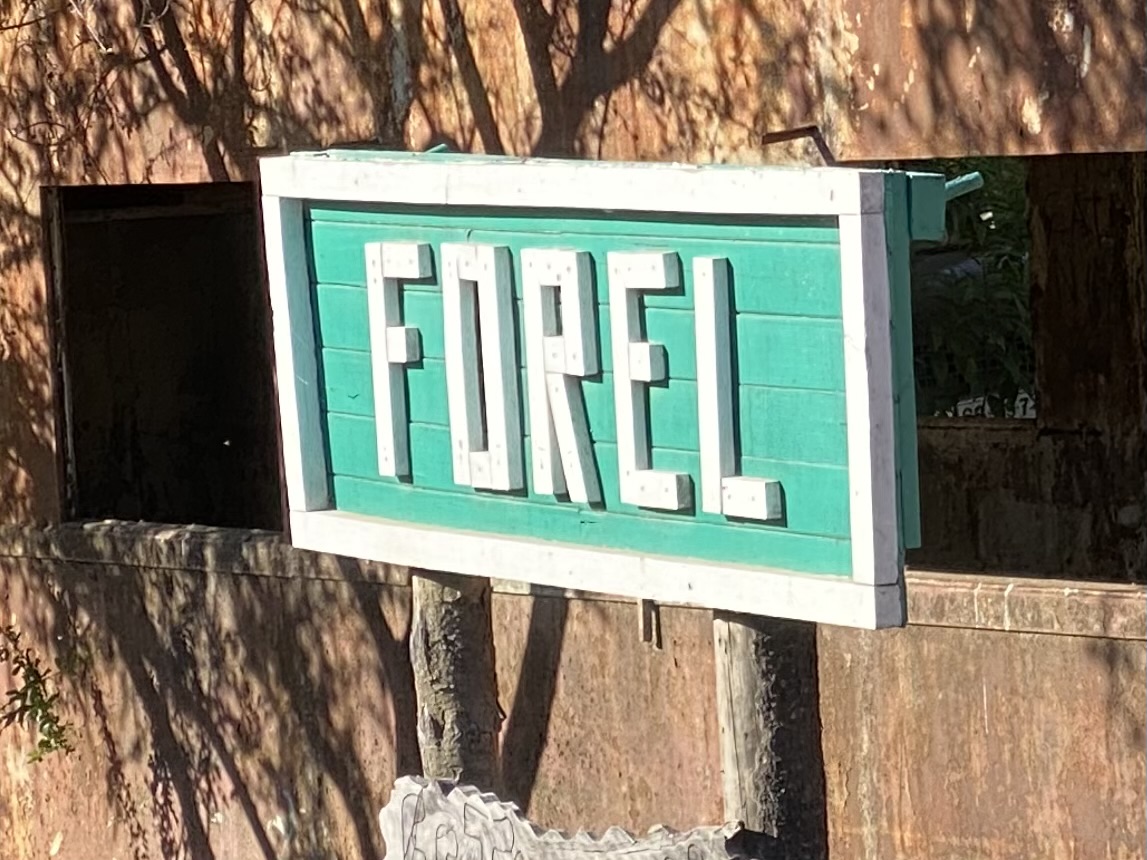
Forel on the Rio Maule in central Chile
The high and steep mountains around the haut lac have been at the origin of a massive tsunami in the year 563. An important fraction of a mountain, the exact location of which is still debated, produced a massive shift in the bottom of the lake that created a wave of 8m-13m all the way to Geneva destroying a large number of settlements. This event remained in the popular culture, was mentioned by Forel in his study of the lake and was confirmed in recent decades by solid research. Such geological events in historical times remind us that our surroundings are not eternal but subject to major changes. With the present population density around the lake a similar event would be devastating.
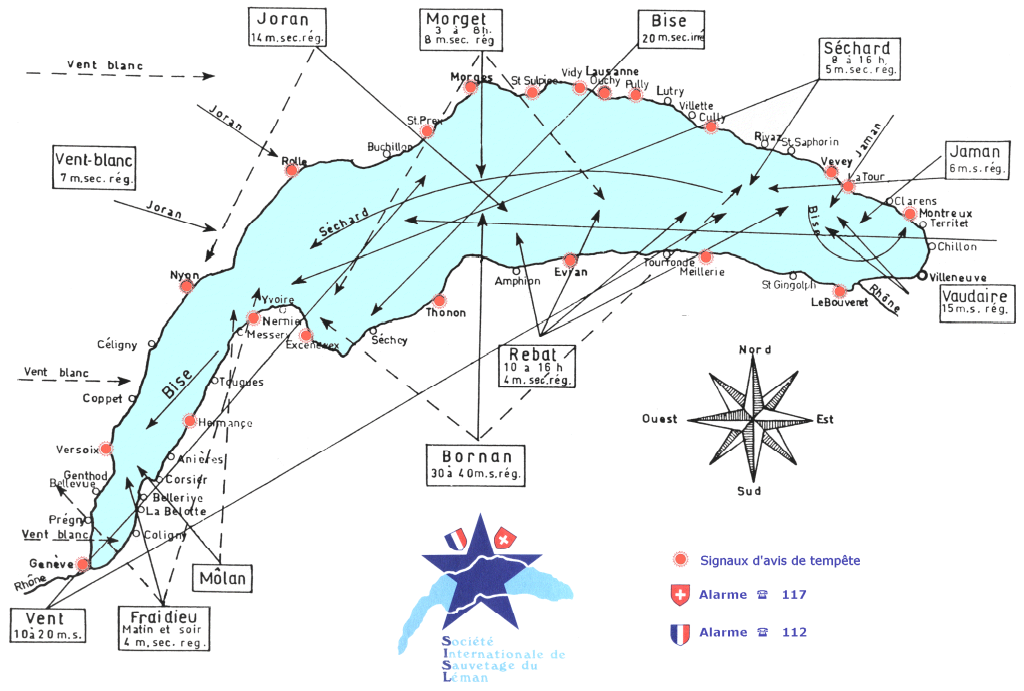
The wind pattern around the lake is a rather complex one. With opermission from the Association de sauvegarde du Léman.
The varied orography of the region creates a complex wind pattern. Each wind with a specific name, each somehow, but not simply, related to the synoptic weather pattern. The main weather hazard lies in very strong winds that appear within one or very few minutes mostly in situations of cold fronts or thunderstorms. These winds can blow up to 50kt, or more albeit for a short period of time. This happens typically once per year. When it comes during a race it brings havoc to the fleet, even if the event is foreseen and announced. When the wind goes away and light comes back one sees capsized boats, people in the water and broken masts. It also happens that some boats sink. There have been very few deaths, though. The rescue services are all on call during these races.

Before the storm on Saturday afternoon during the 2019 Bol d’Or somewhere on Lake Geneva. Photo Y. Rincki
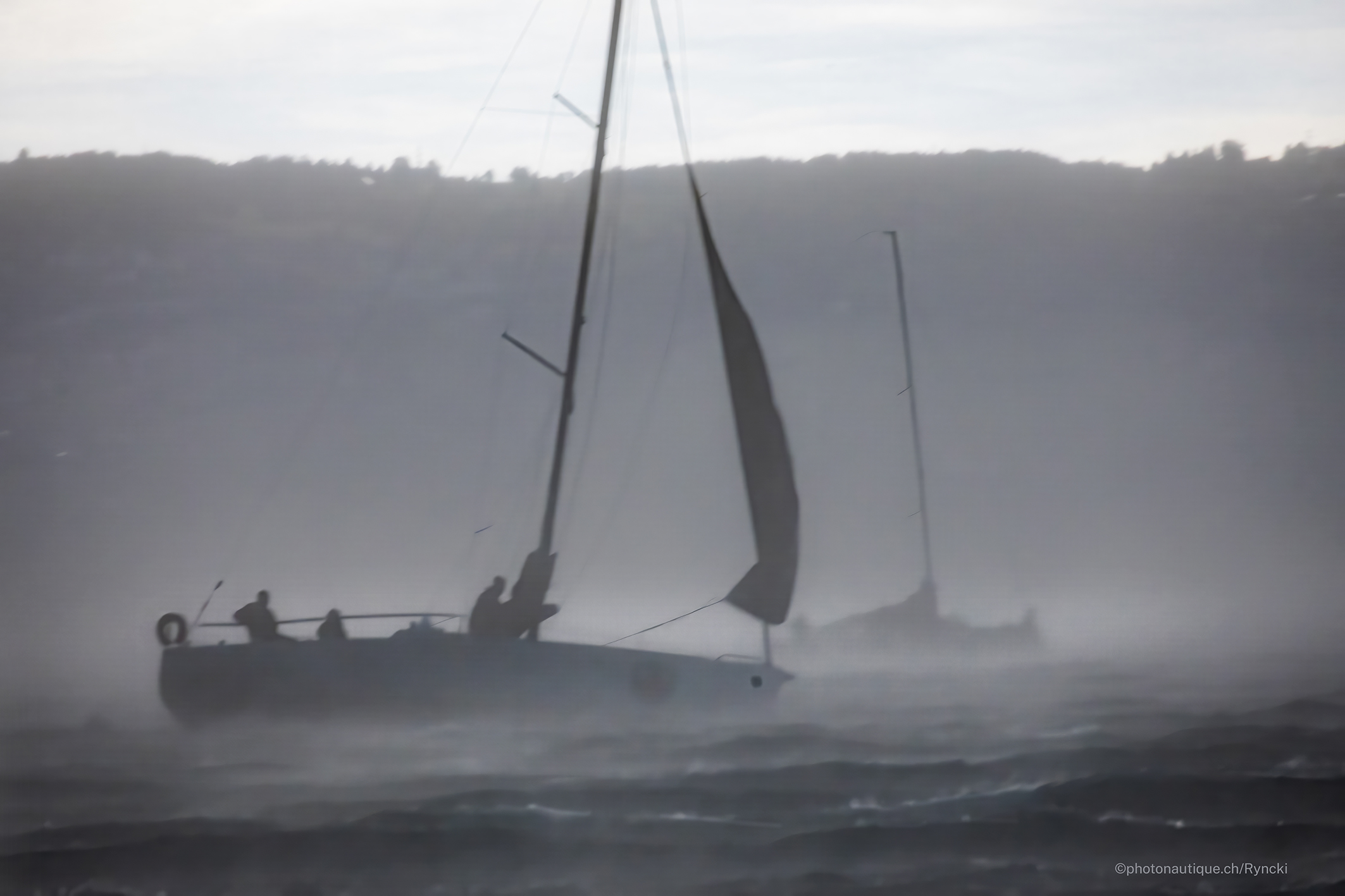
Windy during the same storm Photo Y. Rincki
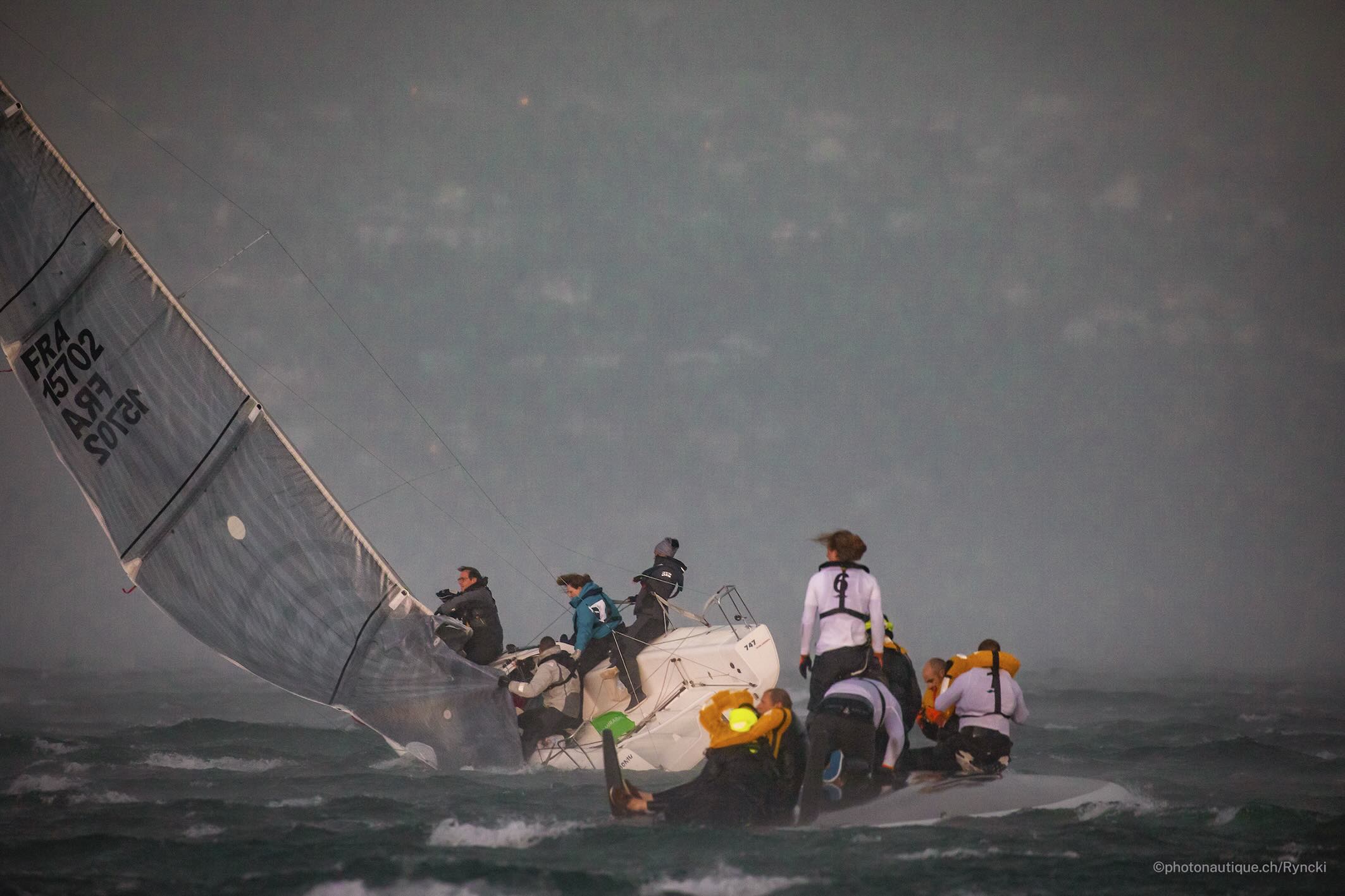
A turned over boat at the end of that storm. Photo Y. Rincki
The best known race is the bol d’or. This leaves a Saturday morning mid-June from Geneva. The only mark is at the other end of the lake. The boats have to round the mark and sail back to Geneva. Some 400 boats participate, making for dense traffic during the night. It used to require until well into Sunday to finish. The fastest boats now can do this in few hours. These very fast boats are the result of intense development with the specific aim to win this race. The effort and money thrown into this exercise is stunning in view of the perceived local nature of the event. It is also surprising because the very complex nature of the winds demands a very deep knowledge of the area in order to succeed. Despite this, technology seems to be a dominant factor to win the race. It is in this frame that top racing teams develop. The best known of them being Alinghy, the team that won twice America’s cup, the only Europeans to win this challenge since its creation.
The mountain ranges around the lake, the Jura in the North and the Alps in the South make for difficult winds but also for stunning landscapes. Snow caps the nearby summits and the Montblanc seen in majesty from several angles all make for beautiful sailing during all seasons. The steep vineyards on the North shore remind that wine is an important element of the local economy. The main wine, a white wine from chasselas vines, is one of the best white wines in Europe. This is not well known around the world, a problem for the producers, but a benediction for a wine drinking culture most pleasant to live in.
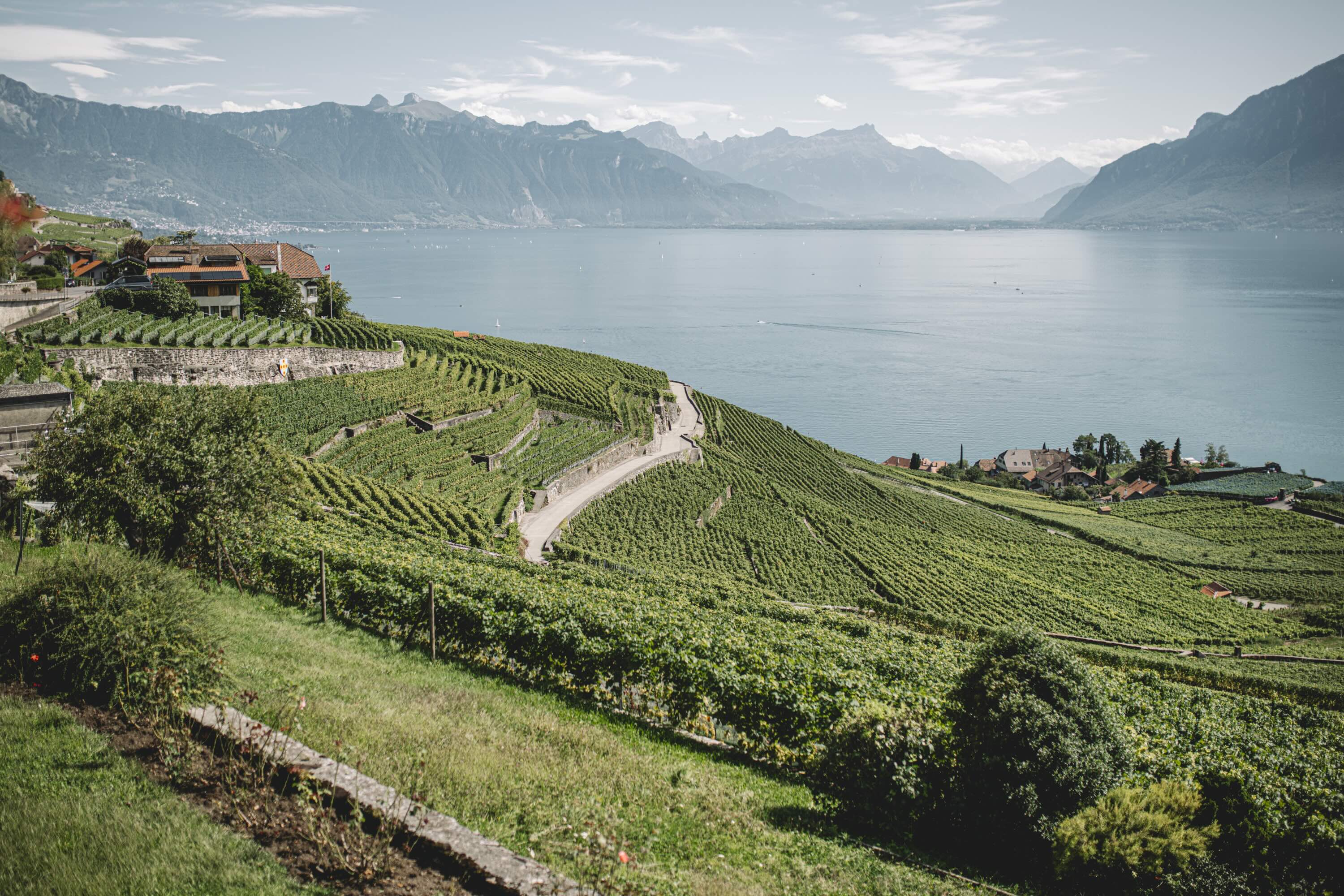
The lake seen from the Lavaux vineyard on the North shore of the haut lac. The Lavaux is a world heritage site of UNESCO since 2007. Photo : © LPm –Joana Ferreira
In these surroundings sailing the lake was high on our agenda when coming back from Papeete. But this had to wait for the sale of Gaia. The hurricane season in French Polynesia begins in November and ends in April. Well ahead of our crossing the Pacific we had therefore booked a berth in a hurricane secure marina. The idea was to leave Gaia there, fly back to Switzerland and continue the following season possibly to Alaska. This meant that Gaia should be sold before or after that period, when it would be safely tucked on shore. Potential buyers were however few, so the broker told us. But in August a US citizen was serious enough in his intentions to make the trip to Papeete. The discussions were difficult to say the least but the broker kept them going and a deal was finally reached. The paperwork was complex. At the signature time, an electronic business, the broker was in Australia, the lawyer organizing the sale in New Zealand, the buyer in Atlanta, our trust person on board in Papeete and we sat at home in Switzerland. Needless to say that the meeting was at an awkward time for most of the participants. The electronics and communications were kind enough to function everywhere and the sale acted. A relief to not have the responsibility of a boat thousands of kilometers away with an approaching hurricane season, but a very sad time as it painfully illustrated the end of our blue water cruising.
Lake Geneva is never going to feature in the story of a qualifying voyage for the OCC. It nonetheless provides for cruising very different landscapes, two countries, France and Switzerland, and different human environments. With this in mind, and Gaia sold, we decided to buy a boat. Our choice was a Winner 950, a Dutch construction, from the mid 1990s. This boat designed for the North Sea has all the features we can wish to live aboard for periods of a few days during all seasons, as it is equipped with a heating system. This boat will allow us to discover in detail the small world around us rather than the large expanses of the oceans. The only problem, but not an easy one, is to find a berth. These are in short supply on the lake. Until one becomes free we use that of friends or a mooring not very far.
We started using Polaris, our boat, in November 2025 as the days became short and the temperature dropped. A time of the year when nobody sails around here. We went for a first cruise at the Winter solstice up to the haut lac for two days. We then sailed few times to cities to see a movie or meet friends. In June there was a series of literary readings of texts in a wonderful little town just down the vineyards where we also went. It was at the time of the G7 meeting in Evian, on the French shore of the lake. Navigation was then prohibited for security reasons on the French waters of the lake. Military, police and customs boats patrolled everywhere. We were controlled once well within Swiss waters.
Sailing Polaris means that the OCC colours fly over the lake on the backboard spreader of Polaris. OCC members traveling through our region are most welcome to make themselves known with the view of sharing a drink.